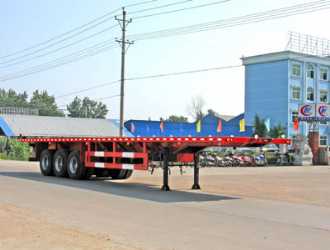
Your semi trailer shipment to Saudi Arabia now requires both Product COC (PCoC) and Shipment COC (SCoC)—miss one document, and your cargo gets stuck at port with growing demurrage fees that can exceed $5,000 in a single week.
1. Why Exporters Fail at Saudi Arabia COC Certification for Semi Trailers
1.1 The Dual-Certificate Mandate Since June 2024
Saudi Arabia enforced new rules in June 2024. Every low bed semi trailer and refrigerated tank semi trailer entering the country now requires two separate certificates: Product CoC (PCoC) and Shipment CoC (SCoC). The PCoC is valid for one year. The SCoC is valid for one shipment only. Missing either one? Your cargo won't clear customs—it sits at port, and demurrage fees start immediately.
Here's what happens in reality. You ship a low bed semi trailer to Jeddah port. The customs broker calls: "Where's the SCoC?" You don't have it. The importer forgot to register on the SABER platform and file for it. Now your cargo is in a holding bay, accruing $200-$300 per day in storage costs. After 20 days, you're out $4,000–$6,000.
→ This establishes the regulatory urgency and dual-document requirement for overseas buyers.
1.2 Why Inspection Reports Get Your Shipment Rejected
We've seen it happen countless times. An exporter submits a commercial invoice listing: "Low bed semi trailer, 49000 kg total weight, mechanical spring suspension." Sounds complete on paper. Saudi customs sees it differently. They want specific numbers:
Spring plate count per side (4/4 or 10/10?)
Underrun protection type (bolted or welded?)
Rear axle spacing (1850mm, 2000mm, or 2300mm?)
Brake line pressure (minimum PSI requirement?)
If the inspection report doesn't match these details line-for-line with the invoice, the shipment gets flagged as incomplete. Approval delays 4–8 weeks. One client paid $5,000+ in port storage alone. Another had to ship the trailer back to China for re-inspection—a costly, reputation-damaging mistake.
→ Transitions to technical specifications, preparing reader for detailed compliance standards in Section 2.
2. What Your Low Bed Semi Trailer Must Meet: SASO Technical Standards
2.1 Underrun Protection Spec Compliance (Front/Side/Rear)
Any trailer over 3.5 tons must have underrun protection—this is non-negotiable under SASO-2957. The protective bars need M14 bolts, not M16 (M16 is the Chinese standard). The welding seams must pass visual inspection for cracks and sharp edges. The spacing between bars must match SASO specs exactly.
We've seen entire shipments rejected because suppliers used the wrong bolt size—just 2mm off. One exporter spent an extra 3 weeks getting it right. Your low bed semi trailer frame needs front, side, and rear barriers. Each barrier gets tested separately. The visual inspection checks bolt type, welding quality, material thickness, and gap uniformity.
Practical Tip: Request your manufacturer to source SASO-certified protective device kits rather than building custom. This eliminates design rework later.
2.2 Suspension & Brake System Matching Load Ratings
Your mechanical spring setup must match your declared rear axle load. Our spec sheet offers 2-3 axles with spring configurations of 4/4 or 10/10 leaf plates per side. If you declare -/24000 (24 tons rear axle load on 3-axle setup), the springs must handle that capacity. SASO inspectors verify this during physical inspection in China. Mismatch = automatic failure.
The brake line pressure also gets tested under simulated load conditions. Everything connects: spring count, axle load rating, brake pressure. One weak link breaks the entire certification.
Real-world Example: A low bed trailer was certified for -/18000 rear axle load. During inspection, the brake pressure test revealed undersized brake lines. The trailer failed certification. The exporter had to wait 6 weeks for redesign and re-inspection.
→ Bridges to thermal/material specifications for refrigerated tank trailers and completes low-bed requirements.
2.3 Refrigerated Tank Trailer: Material & Insulation Requirements
Your T700 steel tank body is solid. But SASO Saudi market requires 6mm wall thickness minimum (China standard is 5mm). For extra durability in port salt-air environments, consider 304 stainless steel with hot-dip galvanized + epoxy resin coating—costs 15-20% more but prevents rust claims and extends tank lifespan to 15-20 years.
Your foam insulation? ISO 1496-2 specifies heat transfer must not exceed 0.028 W/(m·K). If your supplier uses cheaper foam (polyurethane only), the thermal test fails. You then need to re-test with better insulation, adding 4 weeks and $1,000+ in costs. Standard 80-100mm foam thickness won't cut it—Saudi summers hit 50°C+, requiring thermal margins.
Test labs—Intertek, TÜV, SGS—must be third-party accredited. Chinese-only test reports get rejected. Everything must be in English, dated, and signed by authorized engineers.
2.4 HS Code Classification & Export Documentation
Low bed semi trailer = HS 8716.40. Refrigerated tank semi trailer = HS 87163100. Use the wrong code on export docs, and customs holds your shipment. Your commercial invoice, packing list, and export declaration must all match. One inconsistency = delay.
→ Transitions to procurement execution and precise timeline management in Section 3.
3. How to Get COC Approval: Timeline, Costs & Document Checklist
3.1 The 90-120 Day Path to Product COC Approval
Product CoC doesn't happen overnight. Here's the real timeline broken down into actionable phases:
Phase 1: Application (Day 1-7) Submit application to SABER platform with your low bed semi trailer specs (49000 kg total weight, mechanical spring, 2-3 axles, 8-12 tires) or refrigerated tank trailer specs (T700 steel, foam insulation, 30-50 m³ capacity, thermal test requirements).
Phase 2: Physical Inspection (Day 8-30) Third-party inspection lab (Intertek/TÜV/SGS) visits your factory or port in China. They verify:
Dimensions & frame geometry
Welding quality & underrun protection specs
Paint condition & material certificates
Tank insulation thickness (for reefer units)
Tire specifications and brake system function
Phase 3: Testing & Verification (Day 31-60) Lab issues formal test report. Thermal test for reefer trailers confirms heat transfer ≤ 0.028 W/(m·K). Underrun protection for low bed gets load-tested under simulated cargo weight.
Phase 4: SASO Review & Issuance (Day 61-90) SASO reviews all documentation and issues your PCoC certificate. This certificate is required before filing for Shipment CoC.
Timeline Rule: Don't start COC process 4 weeks before shipment. You'll miss the window. For low bed semi trailers, start 4 months early. For refrigerated tank semi trailers (more complex thermal testing), start 5–6 months early.
3.2 Cost Breakdown & Accredited Lab Selection
Official PCoC fee: 500 SAR (~$133). Testing/inspection: 3,000–5,000 SAR. Certification agency: 2,000–3,000 SAR. Total: 5,500–8,500 SAR per product model.
Money-Saving Strategy: Negotiate with Intertek, TÜV, or Tabseer to handle your entire product range (all your low bed models, all your refrigerated tank models). First batch costs full price. Renewal batches cost 30% less. This cuts your per-unit COC cost by half after year one.
Example: If you have 5 trailer models, first batch certification costs ~40,000 SAR total. Future renewals for the same models cost ~28,000 SAR. Annual savings: ~12,000 SAR once you're established.
3.3 The Complete Document Checklist (FOB Responsibility)
You're responsible for these under FOB Shenzhen terms:
Document | What Saudi Customs Wants | Why It Matters |
|---|---|---|
Commercial Invoice | Model name, axle count, spring type (4/4 or 10/10?), underrun protection spec, tire size, paint color, factory name, serial numbers | Must match inspection report line-for-line. One mismatch = rejection |
Inspection Report | Third-party verification (Intertek/TÜV/SGS). Physical checks: dimensions, welding, electrical, paint. Dated, signed, in English | Missing = cargo rejected outright |
Technical Drawings | Dimensions, material thickness (6mm for reefer tanks), weld spec, foam spec sheet | Shows design compliance with ISO 1496-2 |
Test Report | Thermal test for reefer (max 0.028 W/m·K). Underrun protection load test for low bed | Labs must be SASO-accredited |
Material Certificates | Steel grade (T700), foam spec, 304 stainless steel if applicable | Verifies material quality |
Factory Certification | ISO 9001 or equivalent | Demonstrates manufacturing capability |
Certificate of Origin | Form A from Chinese Chamber of Commerce | Required for customs clearance |
Importer's Responsibility (CIF terms): File Shipment CoC on SABER platform 48 hours before cargo arrives at Saudi port.
→ Transitions to real-world pitfalls and prevention strategies.
4. Common Export Mistakes & How to Prevent Them
4.1 Underrun Protection Spec Mismatch
The Problem: You design a low bed semi trailer with rear protective bars. Looks good in China. But SASO-2300 has different bolt sizes, material specs, welding gap measurements. Your supplier builds to Chinese GB standards instead.
Result: Entire shipment flagged "non-compliant." Importer must modify all units (costly, weeks of delay) or the cargo gets refused entry.
The Fix: Before production, send the underrun protection design to an SASO-accredited lab for a pre-check. Cost: $200–300. Saves: $20,000+ in remedial work and reputation damage.
4.2 Inspection Report Not Detailed Enough
The Problem: You provide a basic inspection report saying "trailer inspected, all OK." SASO wants specifics: Spring plate count per axle? Checked. Brake line pressure tested? Checked. Tank foam density lab-verified? Checked.
A vague report = rejection = re-test = months of delays.
The Fix: Specify to your testing partner: "Generate SASO-compliant inspection report." Ensure the report lists every spec point from your commercial invoice. If the invoice says "mechanical spring 10/10," the report must verify "confirmed 10 leaf plates per side."
4.3 Corrosion & Material Issues in Hot Saudi Climate
The Problem: Your refrigerated tank uses standard T700 steel with basic hot-dip galvanizing. Jeddah port has salt-air environment. After 6 months, rust appears on exposed welds. Importer blames you for poor quality.
The Fix: Offer upgraded material options early:
Standard: T700 + hot-dip galvanizing (baseline, $X price)
Premium: 304 stainless steel + epoxy resin coating (15-20% cost increase, 15-20 year durability)
Add material options to your product spec sheet before negotiations. Importer chooses based on budget. No surprises later. This transparency builds long-term trust.
4.4 SABER System Registration Delays
The Problem: You ship the low bed semi trailer to Jeddah port. Importer's customs broker hasn't registered a SABER account yet. That account is needed to file Shipment CoC. Cargo sits for 7 days waiting for clearance.
The Fix: Add this to your FOB contract clause: "Importer must complete SABER platform registration 30 days before shipment date." Include a template email explaining the registration steps. Responsibility is shared, but you control the timeline on your end.
4.5 Shipping Timeline & Port Coordination
The Timeline You Need to Know:
Production + COC approval: 5-6 months (must start early)
Factory inspection & payment: 2-3 weeks
FOB Shenzhen → Saudi Arabia (sea): 22-28 days (Shenzhen → Jeddah/Dammam)
Port clearance after arrival: 3-7 days (with complete SCoC documentation)
Total door-to-door: ~6.5-7 months from order to final delivery
Your importer needs to understand this timeline upfront. "Rush me a trailer in 4 weeks" isn't realistic. Once your importer understands the full cycle, they can plan procurement and budget accordingly.
→ Transitions to actionable next steps and natural CTA.
Quick Reference Table: COC Certification & Shipping Timeline
Phase | Timeline | Who Handles | Key Document | Cost (SAR) |
|---|---|---|---|---|
Application submission | Day 1-7 | Exporter + lab | Application form + specs | 0 |
Physical inspection | Day 8-30 | Third-party lab | Inspection report | 3,000–5,000 |
Test verification | Day 31-60 | Lab + SASO | Thermal/underrun test | Included |
PCoC issuance | Day 61-90 | SASO | Product CoC cert | 500 |
Shipping prep | Day 91-100 | Exporter | Complete FOB docs | 0 |
Ocean freight | Day 101-127 | Freight forwarder | Bill of Lading | Varies |
SCoC filing | Day 128-129 | Importer (SABER) | Shipment CoC | 0 |
Port clearance | Day 130-137 | Customs broker | Final release | Varies |
5. Final Recommendation: Next Steps for Exporters
Getting COC right the first time isn't just about passing inspection—it's about building trust with your Saudi importer and avoiding costly delays that damage your reputation.
Here's what we recommend:
Start COC paperwork 5-6 months before your customer needs the trailer. Don't wait. Plan backward from the delivery date.
Send your underrun protection design for a pre-check with an SASO-accredited lab before mass production. Cost: $200-300. Value: avoiding $20,000+ in rework and 3-week delays.
Provide a detailed, SASO-compliant inspection report, not just basic verification. This single document prevents most rejections at Saudi customs.
Clarify in your sales contract: Who handles PCoC? Who handles SCoC? When does payment happen relative to COC approval? Written clarity saves disputes later.
For refrigerated tank semi trailers, offer material upgrade options (stainless steel 304 + epoxy coating) for hot, salt-air environments like Saudi ports. Importer appreciates the choice and transparency.
Use accredited labs consistently (Intertek, TÜV, Tabseer). Building a track record with one lab reduces future certification timelines and costs.
If you're exporting low bed semi trailers or refrigerated tank semi trailers to Saudi Arabia, the compliance landscape is complex—but it's manageable with planning. The exporters who succeed are the ones who treat COC certification as a project milestone, not an afterthought.
Your next step? Reach out to an SASO-accredited lab (Intertek, TÜV, or Tabseer) and request a free preliminary assessment of your trailer specifications. This 30-minute call identifies any spec gaps before you invest in full certification. Most labs offer this no-cost consultation.