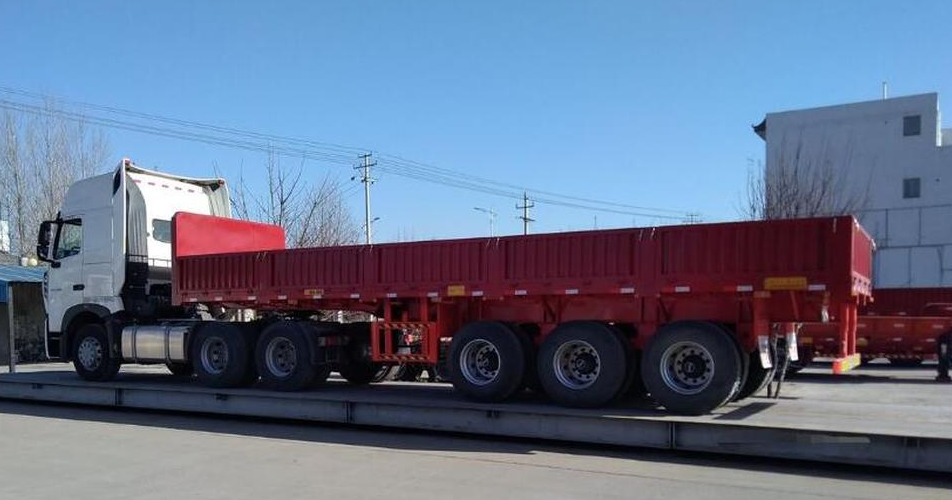
When your tandem semi-trailer arrives at a European port without complete CoC documentation, you're not facing a delay—you're facing a six-month customs hold that costs your buyer thousands in storage fees and missed budget deadlines.
1. Why Documentation Delays Cost Your Buyers Thousands (The Problem Stage)
1.1 | The Hidden Cost of Missing CoC Documentation
Missing the original Certificate of Conformity doesn't just delay clearance—it triggers a complete re-testing cycle that extends your timeline by six months. EU Regulation 2018/858 mandates that every tandem semi-trailer must arrive with an official, stamped CoC document. Without it, customs treats your vehicle as unverified and holds it until re-certification completes.
Here's what happens in practice: Your buyer receives notification that their 40,000L water tank semi-trailer is stuck at port. Storage fees run €50-100 per day. The municipal procurement project timeline shifts. Budget allocations freeze. By week eight, your buyer's project manager has already sourced an alternative supplier.
The real cost? Not the €500 storage fee. It's the lost business relationship and the reputation damage when your buyer tells other government agencies that your company caused delays.
1.2 | Three Documentation Failures That Lock Shipments at Port
European ports specifically check for three missing elements: incomplete brake system test reports (ECE R13), missing side/rear underrun protection certificates (ECE R73), and outdated manufacturing documentation that doesn't match current EU standards. Each missing element extends port hold time by 2-4 weeks independently.
Most Chinese suppliers send generic "brake certification." Customs wants detailed technical data—stopping distance measurements, brake force distribution curves, deceleration rates under load. If that report is missing one page? Port authorities say "re-testing required." That's 14 more days minimum, plus lab fees.
The second failure happens with protective barriers. European regulations (and SASO in the Middle East) require three separate certificates: front protection, side guards, and rear underrun devices. Suppliers who only provide one certificate trigger a compliance flag. Customs flags it. The vehicle gets held until all three are produced.
1.3 | Market-Specific Documentation Differences (Europe vs. Middle East vs. USA)
Your tandem semi-trailer needs different paperwork for different markets. Germany requires CE marks + CoC. Saudi Arabia demands SASO CoC + three protection certificates. The USA only requires DOT brake certification. This inconsistency forces exporters to prepare region-specific document packages or risk port rejection.
Why does this matter? Because when you quote a buyer, they expect one standard export process. If you tell a German procurement manager "your vehicle needs X documents" and an Emirati buyer "yours needs Y documents," you look unprepared. The buyer who chooses your competitor—the one who provides unified export documentation—wins the contract.
2. CE vs. SASO vs. DOT: Which Certification Your Buyers Actually Need (Technical Benchmarking)
2.1 | CE Certification: The European Standard (ECE R13, R55, R73)
CE certification for your tandem semi-trailer requires testing across three ECE regulations. ECE R13 validates brake system performance and stopping distance. ECE R55 certifies coupling device safety. ECE R73 ensures side guard protection for cyclists and pedestrians.
This complete testing package takes 4-8 weeks and costs €2,000-5,000 per certification cycle. Here's the timeline: Week 1-2, you submit technical specifications and sample testing. Week 3-4, the lab conducts physical brake tests and stress testing on coupling systems. Week 5-6, side barrier protection gets validated. Week 7-8, final CoC documentation gets issued.
For your 40,000L water tank semi-trailer, expect the lab to test:
Brake efficiency under full load (must achieve 50%+ braking force)
Coupling system stress at maximum towing capacity
Side barrier height and material strength
Corrosion resistance (if stainless steel or special coatings specified)
2.2 | SASO CoC: The Middle Eastern Triple-Protection Requirement
SASO (Saudi Standards, Metrology & Quality Organization) mandates that tandem semi-trailers over 3.5 tons must pass three separate protection device certifications. Front protective barrier (crash safety). Side guards (pedestrian protection). Rear underrun devices (underride prevention).
Unlike CE, which combines these into one standard, SASO requires independent lab reports for each protection system. That means your vehicle gets tested three times by three different evaluation points. Timeline stretches to 6-10 weeks. Cost runs SR 2,000-3,500 (approximately USD $530-930).
Why the difference? Middle Eastern ports have different traffic patterns and safety concerns. Pedestrians and motorcycles navigate tighter spaces. Side protection becomes critical. European standards assume highway-only use. SASO assumes mixed urban/highway environments.
2.3 | DOT & FMVSS: The North American Brake-Focused Approach
USA and Canadian customs focus exclusively on brake system compliance (FMVSS No. 105/121), requiring minimum 50% brake efficiency on all axles. Unlike European or Middle Eastern standards, North America doesn't mandate side barrier protection or front crash guards for trailers.
DOT testing takes 2-4 weeks and costs USD $1,500-3,000. The lab measures brake deceleration rates, tests emergency braking response, and validates that all axles perform equally under load. For your tandem semi-trailer, they specifically check that both axles generate proportional braking force—no single axle lockup under stress.
2.4 | Quick Reference: Certification Comparison
Certification | Region | Key Tests | Timeline | Cost (USD equiv.) |
|---|---|---|---|---|
CE (ECE R13/R55/R73) | Europe/EEA | Brake + Coupling + Side Guard | 4-8 weeks | $2,200-5,500 |
SASO CoC | Middle East | 3x Protection Devices + Brake | 6-10 weeks | $530-930 |
DOT/FMVSS | North America | Brake Efficiency Only | 2-4 weeks | $1,500-3,000 |
3. How to Prepare Your Tandem Semi-Trailer for Export (The Execution Phase)
3.1 | Pre-Certification Specification Lock: Defining Your 40,000L Water Tank Dimensions
Before applying for any certification, lock down your exact specifications in writing. Your tandem semi-trailer dimensions must be consistent across all documents—CoC, technical drawings, and testing protocols.
For a standard 40,000L water tank semi-trailer:
Tank capacity: 40,000L (exactly—not "approximately")
Overall length: 11,500-13,000mm (varies by frame design)
Height: 3,500-3,600mm (above road surface)
Tare weight (empty): 9,500-10,000kg
Gross weight (fully loaded): 40,000kg max (European standard)
Frame construction: Longitudinal beam + full-length transverse beams, arc-welded with shot-blasted surface finish (from your specs)
Corrosion protection: 304 stainless steel or spray-applied epoxy coating (specify one—don't leave ambiguous)
This specification lock prevents costly re-testing. If your CoC says "304 stainless steel tank" but testing reveals mild steel, you're re-testing. If your dimensions vary by 50mm between drawings and physical vehicle, you're re-testing.
3.2 | The CoC Document Package: What Your Buyer Needs Before Customs Clearance
Your CoC (Certificate of Conformity) is not a single document—it's a complete documentation package that includes:
Original CoC in EU Regulation 2018/858 format (3 physical copies, officially stamped)
Brake system test report (full ECE R13 compliance data)
Coupling device certificate (ECE R55 approval, if applicable)
Protective barriers report (front, side, and rear—three separate documents for SASO; combined for CE)
Product certification from manufacturer (with company stamp and authorized signature)
Bill of Lading (shipped with all documents inside container)
Commercial invoice (matching CoC specifications exactly—no discrepancies)
Certificate of Origin (Form E for EU; Form A for other regions)
Marine cargo insurance certificate (All-Risk proof of coverage)
Timeline: Prepare this package 60 days before FOB shipment date. Certification labs need 4-8 weeks. Shipping and document coordination take 2 weeks. Late preparation means missed port windows and rescheduled sailings (add 2-4 weeks delay).
3.3 | Physical Preparation: Anti-Corrosion Coating & Weight Verification
Your tandem semi-trailer's condition matters. Customs inspectors visually verify that the physical vehicle matches CoC specifications.
For corrosion resistance (critical for water tank semi-trailers): Apply 304 stainless steel for the tank shell, or specify epoxy primer + polyurethane topcoat (minimum 300 microns total thickness). Why? Water carriers operate in salt-spray environments (coastal), humid climates, and occasionally saltwater conditions. Poor coating means accelerated rust. Customs photos show rust. Buyer rejects on arrival.
For axle weight verification: Your tandem semi-trailer must be weighed when empty (tare weight) and when fully loaded (gross weight). European ports spot-check vehicles. If actual axle distribution doesn't match your CoC specification, you violate the 60/40 weight distribution rule (60% load forward of tandem axles, 40% behind). Violation means re-weighing, potential overweight fines, and cargo rejection.
4. Shipping, Insurance & Delivery Timeline (The Execution & Resolution Phase)
4.1 | Logistics Option 1: RoRo Shipping (Cheaper, Lower Insurance Coverage)
RoRo (Roll-On Roll-Off) shipping costs less than container freight—typical rates run USD $1,200-1,800 per tandem semi-trailer from Shanghai to Rotterdam. The vehicle is driven onto a specialized ship, secured, and driven off at destination.
The catch: Standard RoRo liability is capped at USD $500 per vehicle under COGSA (Carriage of Goods at Sea Act). Your 40,000L water tank semi-trailer worth USD $9,000-12,000 is massively under-protected.
Smart buyers purchase supplemental Marine Cargo All-Risk Insurance separately. Cost: 0.5-1.2% of cargo value (approximately USD $45-145 for your vehicle). This covers weather damage, theft, and port incidents that base RoRo doesn't include.
4.2 | Logistics Option 2: FCL Container Shipping (Higher Cost, Full Insurance Coverage)
Full Container Load (FCL) shipping costs USD $1,500-2,500 from China to Europe, but includes automatic All-Risk marine insurance in most contracts. Why? Because the container itself is sealed and tracked. Customs knows where it is every moment.
For a tandem semi-trailer, you'll use a 40-foot high-cube container. Your 11.5-meter water tank semi-trailer fits comfortably with room for spare parts and documentation.
Timeline: Container pickup in Shanghai (1 day), loading and customs clearance in Shanghai (2-3 days), sea transit (20-30 days to Europe depending on route), discharge and customs clearance at destination port (3-7 days if documentation is complete).
4.3 | FOB vs. CIF Pricing Model for Your Buyer
FOB (Free On Board) Shanghai:
Manufacturing cost: ¥56,000-65,000 (your base cost per specs)
Domestic transport to Shanghai port: ¥3,000-5,000
Export customs clearance & documentation: ¥800-1,200
FOB Total: approximately ¥60,000-71,000 (USD $8,300-9,800)
Your buyer pays: Sea freight + import duties + destination port clearance + insurance (if they choose to add it separately).
CIF (Cost, Insurance & Freight) Shanghai to Rotterdam:
FOB Shanghai cost (above): USD $8,300-9,800
Ocean freight (FCL 40ft): USD $1,500-2,500
Marine Cargo All-Risk Insurance (0.5%): USD $42-50
CIF Total: USD $9,842-12,350
Your buyer pays: Only destination port clearance fees (typically USD $200-500 per container).
CIF is cleaner for B2B sales. Your buyer knows the total landed cost upfront. No surprises. No "additional fees" disputes.
4.4 | Complete Timeline: From Order to Final Delivery
Phase | Duration | Key Milestones | Critical Documents |
|---|---|---|---|
Manufacturing & Testing | Weeks 1-2 | Vehicle build + internal QA | Product specs locked |
Certification Process | Weeks 3-6 | Lab testing (ECE R13/R55 or SASO) | Test reports completed |
Shipping Prep | Weeks 5-7 | Container booking + docs finalized | CoC + B/L ready |
Sea Transit | Weeks 7-10 | Shanghai → Rotterdam (20-30 days) | Insurance active |
Port Clearance | Weeks 10-11 | Customs review (if docs complete: 3-5 days) | CoC validated |
Final Registration | Weeks 11-12 | Buyer registers vehicle locally | Complete |
Total Timeline | 10-12 weeks | From order to operation | All docs finalized |
If any documentation is missing? Add 2-6 weeks for re-testing and re-submission.
4.5 | The Real-World Example: Why Documentation Matters
Let's say you're exporting a 40,000L water tank semi-trailer to Germany. Everything is perfect. Manufacturing complete. CoC ready. Insurance arranged.
But in your haste, you only provide the brake system test report. You forget the side barrier protection certificate (ECE R73).
Your buyer's vehicle arrives in Rotterdam. Port authorities scan the CoC. "Missing side guard certification," they note. Vehicle gets impounded. Your buyer's compliance team gets a notice: "Re-testing required. Estimated 14 days. Port storage: €75/day."
That's €1,050 in storage fees plus 14 days delay. Your buyer's municipal procurement project timeline shifts. They're now talking to your competitor.
You could have prevented this with one checklist and 10 minutes of verification before shipping.
5. Getting It Right: Your Certification Checklist
Before your tandem semi-trailer leaves Shanghai, verify:
✅ Original CoC in official EU/SASO/DOT format (3+ copies) ✅ Complete brake test report with stopping distance data ✅ Protective barrier certificates (all three: front, side, rear for SASO/Europe) ✅ Product certification stamped by your manufacturing facility ✅ Specification consistency across all documents (no conflicting dimensions) ✅ Corrosion protection specification matching physical vehicle (304 stainless vs. epoxy coating) ✅ Weight verification (tare + gross, with axle distribution data) ✅ Marine cargo insurance certificate (All-Risk recommended) ✅ Bill of Lading with all documentation attached ✅ Commercial invoice matching CoC exactly
This checklist takes 30 minutes. It prevents 6-month delays.