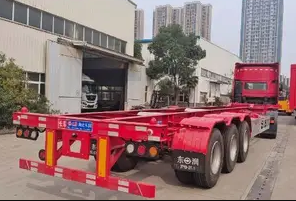
If your 40-ton semi-trailer shipment gets held at Vietnam, Thailand, or Indonesia port for 10–20 days due to certification errors, you're looking at $1,500–$4,000 in demurrage fees alone—but most exporters don't know this until it's too late.
Exporting semi-trailer components to Southeast Asia isn't just about finding a buyer and shipping goods. You need to navigate three completely different certification systems. Get one detail wrong, and your vehicle sits at port while customs figures out compliance. This guide shows you exactly what goes wrong and how to prevent it.
1. Why ASEAN Certification Systems Fail Most Exporters
ASEAN is a trade bloc, but each country runs its own certification system independently. Procurement teams often assume one VR, DLT, or BUJK certificate covers all three markets. It doesn't. Understanding why is the first step to avoiding costly delays.
1.1 Vietnam, Thailand & Indonesia Run Separate Certification Tracks
Vietnam operates the VR (Vietnam Register) system under the Ministry of Transport. Your VR Type Approval lasts 36–60 months depending on your product class. The certificate covers specific dimensions, weight limits, and axle configurations.
Thailand uses DLT (Department of Land Transport) certification with one critical restriction: maximum 12 meters length. Your 15.5-meter semi-trailer exceeds this. You need a Special Route Permit from Ministry of Commerce for projects—but that takes 2–4 weeks to approve.
Indonesia requires BUJK WVTA (Whole Vehicle Type Approval) plus something else most exporters miss: mandatory annual KIR inspection. In 2025, Indonesia changed from bi-annual to annual KIR. Your buyer must schedule this every 12 months or face Rp 5 million (~$300) fines plus loss of operating permits.
The core problem: Buyers think ASEAN means harmonized standards. It doesn't. Each nation verifies separately.
1.2 The ASEAN MRA Myth: Why Mutual Recognition Doesn't Apply
ASEAN has a Mutual Recognition Arrangement (MRA) for automotive products. But here's what exporters get wrong: the MRA only covers OEM components. It does NOT cover whole-vehicle type approval.
This is critical. Your semi-trailer components—if you're selling individual parts like axles, brake systems, or coupling devices—might qualify for APMRA (ASEAN Products MRA). But a complete 40-ton dump trailer? No. Each country still conducts independent final inspection and type approval.
Procurement departments submit bids thinking one VR certificate works across all three countries. Then they submit your documentation to customs in Thailand and get rejected. The customs officer says: "We need DLT approval, not VR." Suddenly you're facing re-certification or shipment rejection.
This misunderstanding alone causes 10-15% of ASEAN semi-trailer export delays.
1.3 Demurrage Costs Spike When Documentation Gaps Occur
Port holds average 5–20 days when certification or documentation is incomplete. Here's what it costs:
RoRo vessel demurrage: $100–$300 per day per vehicle. A 15-day hold = $1,500–$4,500. Add re-certification fees ($2,000–$3,500), and your total exposure reaches $4,000–$7,500 per shipment.
But there's more. A 3-week delay in a municipal sanitation project or mining operation creates operational impact far beyond demurrage. Construction projects lose daily productivity. Mining operations reschedule equipment deployment. The buyer deducts delay costs from your invoice or demands contract renegotiation.
Prevention is cheaper than recovery.
2. How Compliance Failures Happen: The Documentation Path
Most compliance failures follow the same sequence: incomplete planning → missing documents → port hold → certificate mismatch → final rejection or costly re-certification. Understanding this path helps you identify and fix problems before they occur.
2.1 VR Certificate Expiration: Vietnam's Hidden Deadline
Vietnam VR certificates expire on a fixed schedule. Your certificate is valid for 36–60 months depending on your product's COP (Certificate of Production) class. This sounds straightforward until you encounter a multi-year supply arrangement.
Here's what happens: You get VR approval in Year 1. The buyer orders vehicles annually through Year 5. Your Year 5 batch ships with a certificate that expires in Year 5—mid-year. Customs holds the shipment. They require either (1) an updated VR certificate, or (2) proof that the vehicle matches the certified specifications from the original approval date.
The hold lasts 5–10 days. Your buyer's project is delayed. Re-certification costs $2,500–$3,500 and takes 4–6 weeks.
We've seen this happen twice in the last 18 months. One exporter shipped vehicles with a VR certificate expiring 90 days after the shipment arrived. The importer's customs broker caught it. The vehicle stayed in the port for 8 days while the exporter scrambled to either re-certify or get written confirmation from Vietnam Register that the vehicle specifications hadn't changed.
Solution: Write into your contract: "Seller guarantees VR Certificate validity extends at least 24 months beyond shipment date." Start renewal planning 18 months before expiration. The cost is $2,000–$3,500 per renewal—far cheaper than port delays.
2.2 Thailand's 12-Meter Limit: Why Your 15.5m Trailer Gets Flagged
Thailand's Land Transport Act specifies: maximum vehicle length is 12 meters without special authorization.
Your 15.5-meter semi-trailer far exceeds this. So what happens? There IS a workaround. Ministry of Commerce issues Special Route Permits for construction and infrastructure projects. But—and this is critical—the approval process takes 2–4 weeks.
Most exporters don't realize this until the vessel is already en route. By then, it's too late. The vehicle arrives at Bangkok port. Customs sees 15.5 meters. They check for Special Route Permit. It doesn't exist. They hold the container while MOC processes an emergency application.
Result: 5–7 day port hold. Your buyer's project schedule slips. They blame you.
The cost? Demurrage ($100–$200/day × 7 days = $700–$1,400) plus project delay ($30,000+ if this is a critical path infrastructure item).
Correct approach: 90 days before shipment, confirm your buyer has a valid Project License from Ministry of Commerce. File the Special Route Permit application at least 4 weeks before vessel departure. Include: (1) Vehicle dimensions and specifications, (2) Project route map, (3) Intended departure date, (4) Insurance certificate. Track the MOC reference number. Share it with your buyer and customs broker.
Cost to prevent this? $300–$500. Cost of delay? $30,000+.
2.3 Indonesia's KIR Inspection Trap: Annual Compliance Is Mandatory
Indonesia changed vehicle inspection rules in 2025. Commercial vehicles (yellow-plate trucks, trailers, buses) now require KIR (Kendaraan Bermotor—Vehicle) inspection every 12 months instead of every 24 months.
Here's the problem most exporters don't communicate: KIR is mandatory. The buyer can't legally operate the vehicle without it. KIR testing stations are sparse—fewer than 100 nationwide. In remote regions (East Kalimantan, Papua), the nearest station might be 3–5 hours away. First appointment? Could be 4–8 weeks out.
Buyers often don't know this. They take delivery, try to operate for 3–4 weeks without KIR, then get fined Rp 5 million (~$300) and lose their operating permit until they pass inspection.
Some buyers blame the exporter. They claim you sold them a non-compliant vehicle. They demand compensation or contract renegotiation.
The government has made KIR testing free (2025 policy change), but operational logistics still fall on the buyer.
How to prevent buyer frustration: Include a "KIR Compliance Schedule" in your export documentation. Tell the buyer exactly: (1) KIR is required within 90 days of vehicle arrival, (2) Here are the certified testing stations near your location, (3) Here's the average appointment lead time. Provide contact info for the nearest station. Offer to connect them with your local logistics partner who can coordinate the first inspection.
This transforms a surprise compliance burden into a managed process.
2.4 Documentation Mismatches at Port Clearance
Even with valid certificates, documentation errors cause holds. Here are the most common:
Invoice vs. Certificate Mismatch: Your Commercial Invoice lists "40-ton dump trailer." Your VR certificate says "max GVW 39,500 kg." Customs spots the 500 kg discrepancy. They hold the shipment for reclassification—3–5 days.
Wrong HS Code: Your Bill of Lading uses HS Code 8716.90 (parts of trailers). The vehicle is complete—it should be HS 8716.40 (finished trailers). Wrong classification. Customs recalculates duties. Possible penalties.
Origin Certificate Invalid: Your Origin Certificate is signed by a local Chamber of Commerce. Indonesia customs wants a government-issued certificate only. Rejection. 1–2 weeks to reissue.
Missing Notarization: For Indonesia, your BUJK certificate copy isn't notarized or consular-authenticated. Indonesian customs won't accept it as proof. Hold. 1–2 weeks for retroactive authentication (expensive and slow).
Weight Distribution Missing: Vietnam requires documentation showing axle weight distribution. Your invoice says "40 tons gross" but doesn't break down per-axle loads. Customs requires clarification. 2–3 day delay while you scramble to provide the spec sheet.
All of these are preventable with a 30-minute document review process before shipment.
3. How Smart Buyers Verify Your Compliance
Procurement departments now check certifications directly. Understanding their verification process helps you prepare bulletproof documentation.
3.1 Vietnam: Direct VR Registry Verification in 10 Minutes
Vietnamese procurement teams don't trust exporters. They verify everything themselves.
They go to vr.org.vn (Vietnam Register official portal) and search your certificate number. They instantly see: (1) Certificate validity dates, (2) Approved vehicle specifications (dimensions, weight, axle configuration), (3) Compliance status.
If your quoted specs don't match the certified specs, they flag it. They won't proceed until discrepancies are resolved. They might ask: "Your invoice says 15.5m × 3.2m, but VR shows 15.5m × 3.15m. Which is correct?"
This takes 10 minutes on their end. But it forces you to have perfect alignment between your spec sheets, invoices, and VR certificate.
Implication: Before sending any quote, verify that every dimension, weight limit, and configuration in your marketing materials matches your VR certificate exactly. If you customize a vehicle after VR approval, you need a certificate modification—not just a verbal agreement.
3.2 Thailand: DLT Confirmation & Special Permit Status Tracking
Thai procurement teams don't just verify certification. They contact DLT directly and ask: "Is this approval valid for 15.5-meter semi-trailers?"
DLT will say either (1) "Yes, with Special Route Permit," or (2) "No, vehicle exceeds standard limits."
Then they check Ministry of Commerce. They search for your Special Route Permit application. If it's not filed, they know the vehicle can't legally enter Thailand without it.
Some buyers are sophisticated. They literally call MOC directly: "When will you approve permit #XYZ for this Chinese exporter's vehicle?"
If you claim the permit will be filed but haven't actually done it, you lose the deal.
Implication: File the Special Route Permit application BEFORE you send your quote to Thai buyers. Include the MOC application reference number in your proposal. This signals professionalism and removes buyer risk.
3.3 Indonesia: DGLT Portal Check & KIR Station Location Verification
Indonesian buyers verify BUJK SUT certificates on the DGLT portal (Directorate General of Land Transport official website).
Then they ask you a specific question: "Where's the nearest certified KIR testing station from our operating location?"
If you can't answer, they see you as unprepared. They might select a competitor who provides a station list + contact info + average wait times.
Smart exporters provide this upfront. They include a "KIR Testing Stations Near [Buyer's Location]" attachment in their proposal. They show the buyer: (1) Station name, (2) Distance, (3) Typical appointment lead time, (4) Average inspection cost (now free in 2025, but vehicle logistics still apply).
This transforms KIR from a surprise compliance burden into a transparent logistics step.
Implication: Before quoting to Indonesian buyers, research KIR station distribution. Map the 3–5 nearest stations to their location. Include this in your proposal. Shows professionalism + reduces buyer uncertainty.
3.4 The 72-Hour Customs Declaration Rule: Timing Matters
ASEAN framework requires all pre-arrival customs declarations 72 hours before the vessel arrives in port.
If you file the declaration at 68 hours before arrival, customs might still accept it—but with notes. If you file at 36 hours before arrival, expect questions. If you file AFTER arrival? Expect delays while port authority processes your late declaration.
Missing this deadline signals poor logistics coordination. Buyers notice. They think: "If this exporter can't file paperwork on time, how reliable is their product quality?"
4. Your Checklist: Prevent Compliance Failures Before Shipping
This section gives you concrete steps to execute before your vessel leaves port.
4.1 72-Hour Pre-Shipment Verification Checklist
72 hours before your vessel departs, confirm these items:
Semi-trailer components and frame: Verify all specifications (15.5m length, 3.0m width, 3.2m height, 40-ton GVW, 5-axle configuration, 17,003 kg saddle load) match your VR/DLT/BUJK certificate exactly.
Certificate validity: VR certificate valid ≥24 months from shipment date. DLT approval current. BUJK SUT current.
HS Code classification: Use HS 8716.40 for dump/platform trailers. Verify on your invoice + Bill of Lading.
Weight distribution document: Include axle-by-axle breakdown (Vietnam standard: no single axle >10 tons). This satisfies Vietnam customs questions.
Thailand Special Route Permit (if applicable): If vehicle >12m, confirm MOC Permit application submitted ≥3 weeks prior. Track MOC reference number.
Indonesia BUJK authentication (if applicable): BUJK certificate copy notarized or consular-authenticated. This takes 1–2 weeks—don't wait until last minute.
Customs broker assignment: Assign a local customs broker at destination port 2 weeks before arrival. They should file pre-arrival declaration 72+ hours early.
Documentation package: Assemble: Commercial Invoice, Bill of Lading, Packing List, Origin Certificate (government-issued), VR/DLT/BUJK cert copies (originals or certified), Weight distribution chart, Insurance certificate.
Missing any of these triggers port delays.
4.2 Buyer Verification Checklist: What They'll Actually Do
Share this checklist with buyers PROACTIVELY. Show them you've already considered their verification needs:
Certificate authenticity: "You can verify our VR certificate at vr.org.vn using certificate #[XXX]."
Specification matching: "Our vehicle matches VR specifications exactly: 15.5m × 3.0m × 3.2m, 40-ton GVW, 5-axle config."
Origin certificate source: "Our Origin Certificate is issued by [Government Agency Name], not a private chamber."
Thailand permit status (if applicable): "MOC Special Route Permit reference #[XXX] filed [Date]. Expected approval [Date]."
Indonesia KIR station info (if applicable): "Nearest KIR station to your location: [Station Name], [Distance], typical wait time [Weeks]."
Pre-Shipment Inspection: "If required, our PSI scope includes VR/DLT/BUJK compliance verification + weight distribution validation."
Transparency builds trust. Buyers move forward faster when they see you've thought through their verification process.
4.3 Regional Implementation: Vietnam, Thailand & Indonesia Specifics
Vietnam timeline:
Month 1: Start VR renewal process if certificate expires <18 months.
Month 2: Confirm buyer requirements. Update quotes if specs change.
Month 3: Assemble documentation. File 72-hour pre-arrival declaration.
Month 4: Shipment. Port clearance: 5–7 days typical.
Cost of VR renewal: $2,000–$3,500.
Thailand timeline:
Month 1: Confirm buyer has Ministry of Commerce Project License. File Special Route Permit application.
Month 2–3: Track MOC approval (typical 2–4 weeks).
Month 4: Finalize shipment. File 72-hour pre-arrival declaration.
Shipment. Port clearance: 5–7 days typical. With permit delays: 10–14 days.
Cost of MOC permit: $150–$300.
Indonesia timeline:
Month 1: Arrange consular authentication of BUJK cert (1–2 weeks lead time).
Month 2: Confirm buyer location. Research KIR stations. Provide station list.
Month 3: Finalize shipment. File 72-hour pre-arrival declaration.
Shipment. Port clearance: 5–7 days typical.
Schedule buyer's KIR appointment for 60–90 days post-arrival.
Cost of consular auth: $600–$800.
Each market has different timelines. Plan accordingly.
4.4 Cost-Benefit ROI: Why Prevention Pays 33:1 to 100:1
Scenario A: Vietnam VR Renewal
Prevention cost: $800 (compliance audit before shipment).
Delay cost if cert expires: $2,250 (demurrage) + $2,500–$3,500 (re-certification) + $30,000+ (project delay).
ROI: 62:1
Scenario B: Thailand Special Route Permit
Prevention cost: $300 (coordination + application filing).
Delay cost if not filed: $1,200 (demurrage) + $800 (permit fee) + $30,000+ (project delay).
ROI: 100:1
Scenario C: Indonesia Consular Authentication
Prevention cost: $600 (advance authentication).
Delay cost if missing: $1,200 (clearance hold) + $600 (retroactive auth) + $20,000+ (mining project pause).
ROI: 33:1
Prevention always wins financially.
Quick Reference Table: ASEAN Certification At a Glance
Country | Certification Body | Certificate Validity | Key Restriction | Timeline to Approve | Renewal Cost |
|---|---|---|---|---|---|
Vietnam | VR (Vietnam Register) | 36–60 months | None (but specs must match) | 10–12 weeks | $2,000–$3,500 |
Thailand | DLT (Dept. Land Transport) | 3–5 years | Max 12m length (need MOC permit if >12m) | 6–10 weeks | $1,500–$2,500 |
Thailand (MOC) | Ministry of Commerce | Per-project | Special Route Permit | 2–4 weeks | $150–$300 |
Indonesia | BUJK (Type Approval) | 3–5 years | Mandatory annual KIR inspection | 8–12 weeks | $2,500–$3,500 |
Indonesia (KIR) | Local testing station | Annual (2025 rule) | Must be renewed every 12 months | 4–8 weeks to 1st appointment | Free (govt) + logistics |
How to read this table: If you're exporting a 15.5m semi-trailer to Thailand, you need BOTH DLT certification (6–10 weeks) AND a Ministry of Commerce Special Route Permit (2–4 weeks additional). Total timeline: 8–14 weeks. Start planning early.